Without My Camera
What I saw and couldn’t photograph when my home became a battlefield.

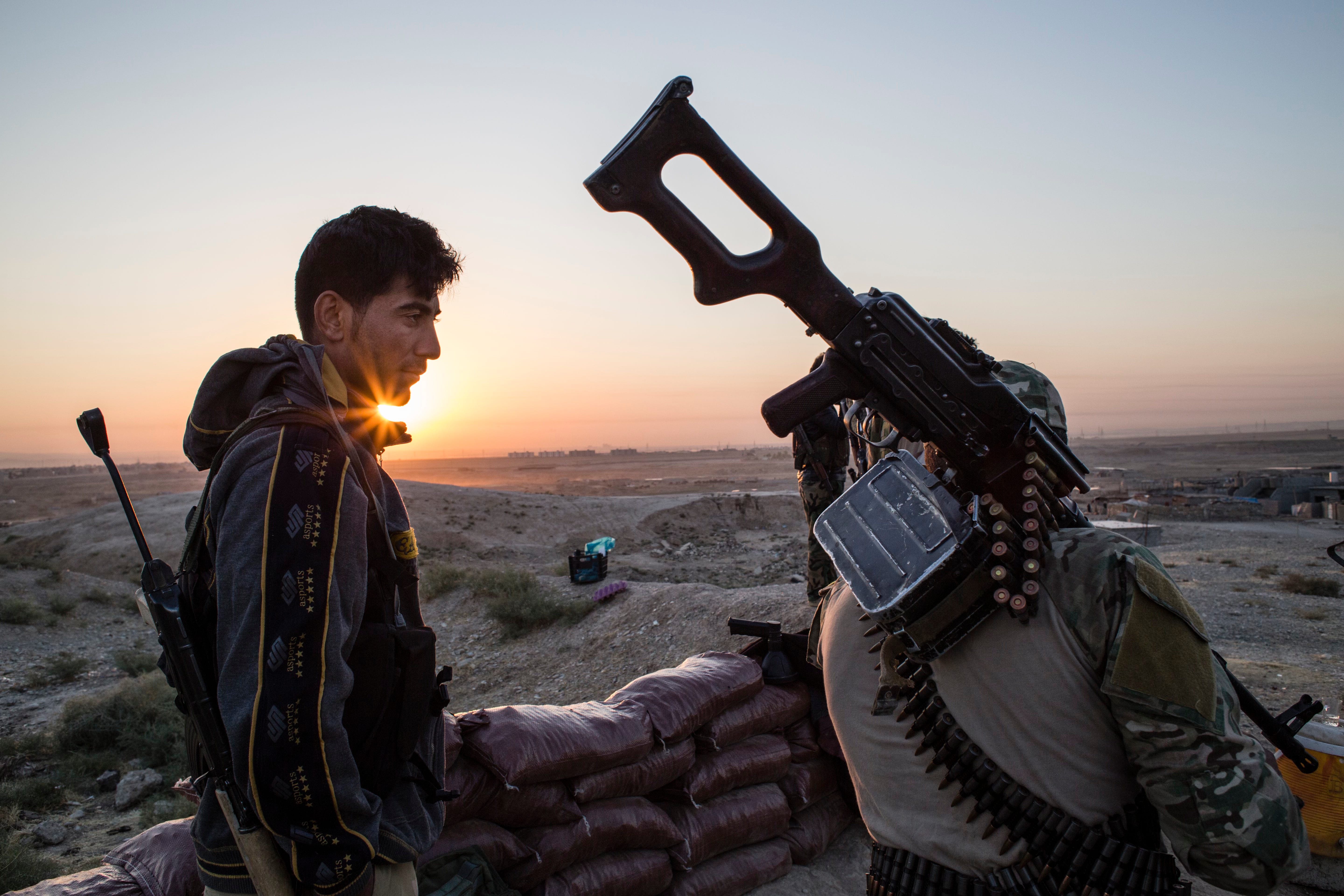
On October 16, 2017, just a week after the Kurdish independence referendum, Iraqi forces entered my hometown of Kirkuk and retook the city from Kurdish control.
The world saw it as another shift on the map of Iraq. A headline that flickered across newsfeeds for a day or two before disappearing into the churn of other crises, but for me, it was the day my home changed forever.
I had returned only days earlier from work trip in Amsterdam, where I had been living for several years. I’d left Kirkuk in 2010, chasing a different life, but when the the war against ISIS started went back to my homeland to cover it. The ended, referendum was announced, I felt a pull stronger than reason. I wasn’t coming back as a visitor. I came as a photojournalist and as a Kurd from Kirkuk who knew what that vote for independence meant.
The referendum had been the dream of generations: the possibility of an autonomous homeland after decades of broken promises, wars, and betrayals. For many Kurds, the “Yes” vote wasn’t just a political act, but it was a declaration of identity, of survival. I wanted to capture that historic moment through my lens, to document not only the politics but also the faces of my people as they stood on the edge of what we believed could be a new future.
The Night Before the Fall
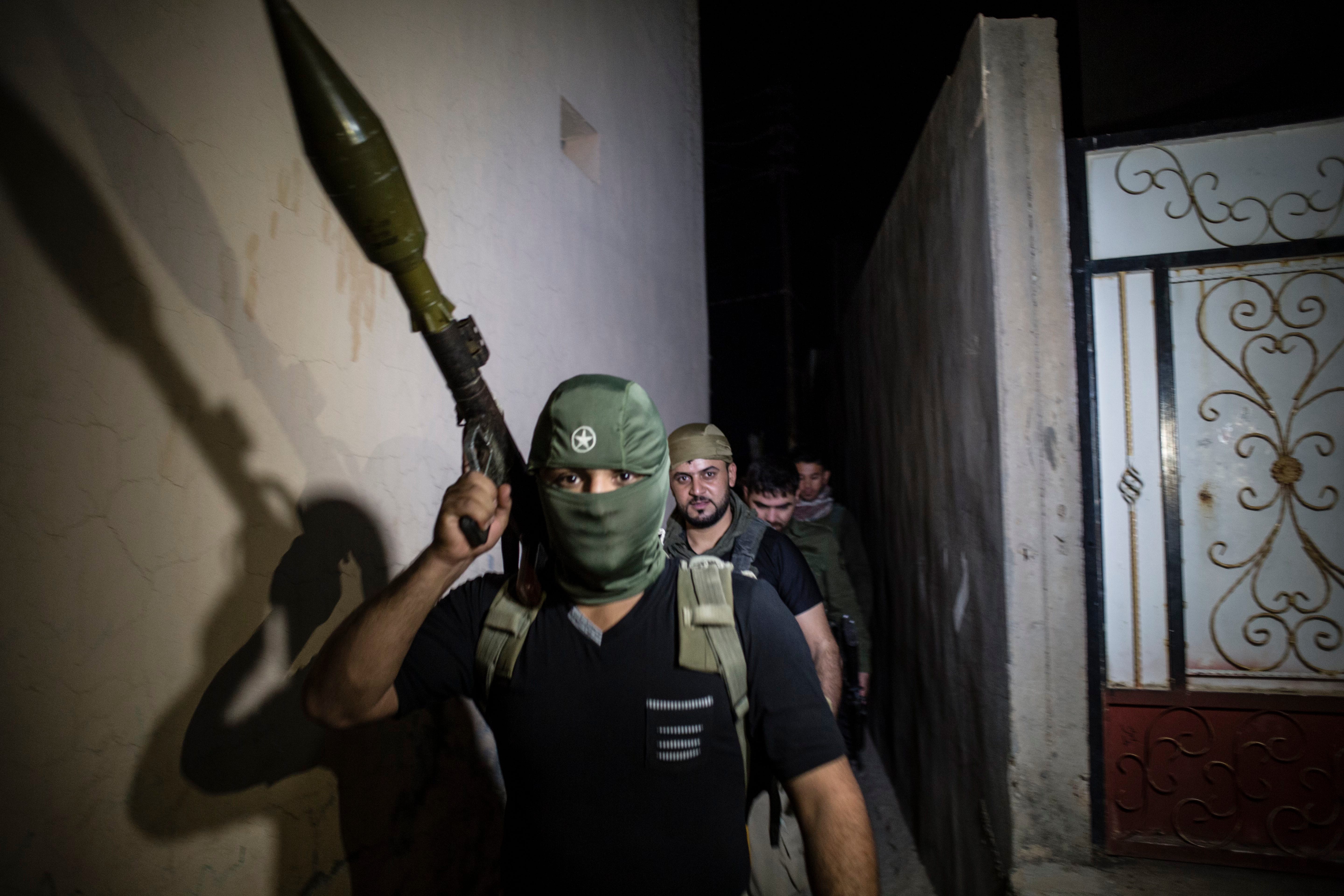
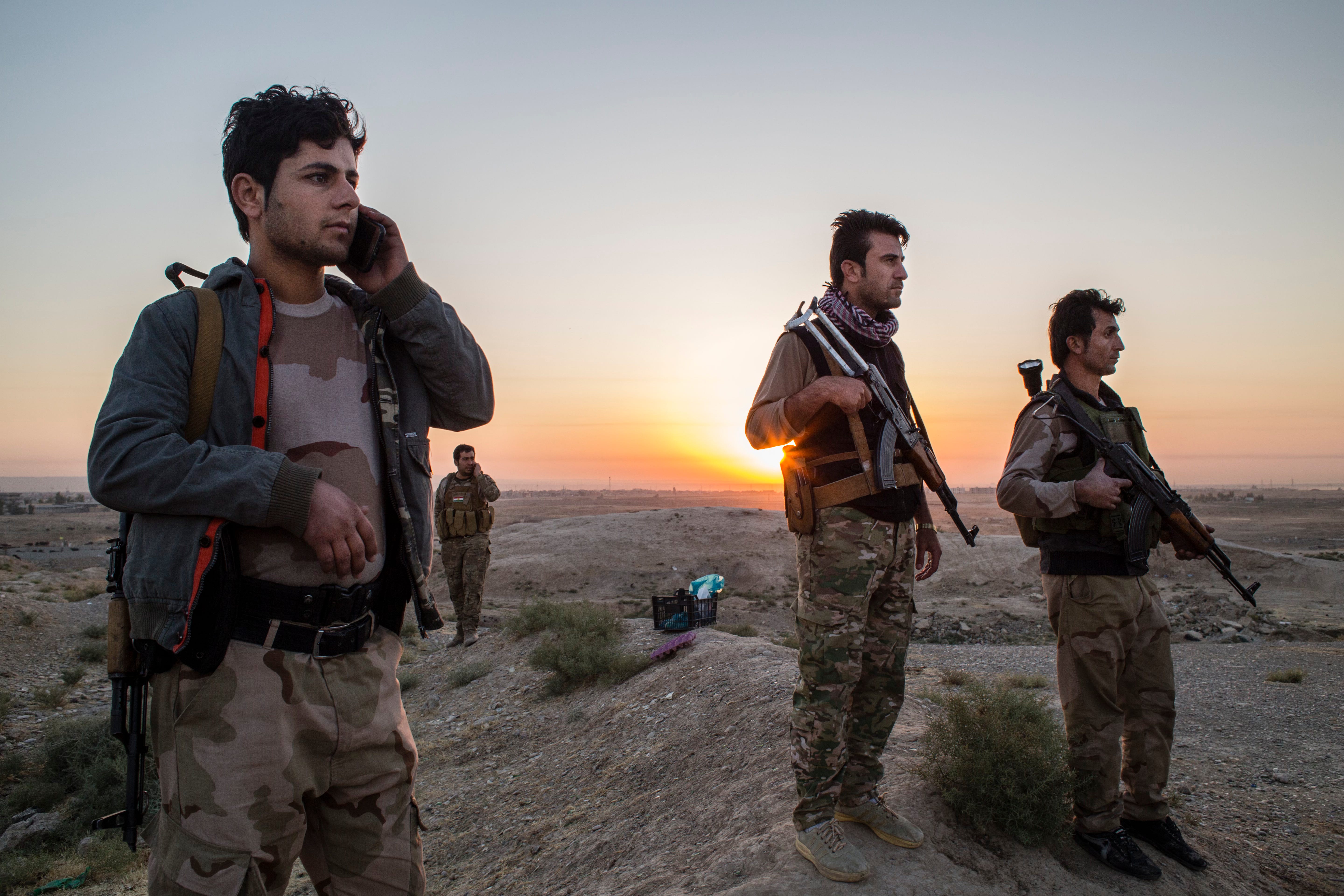
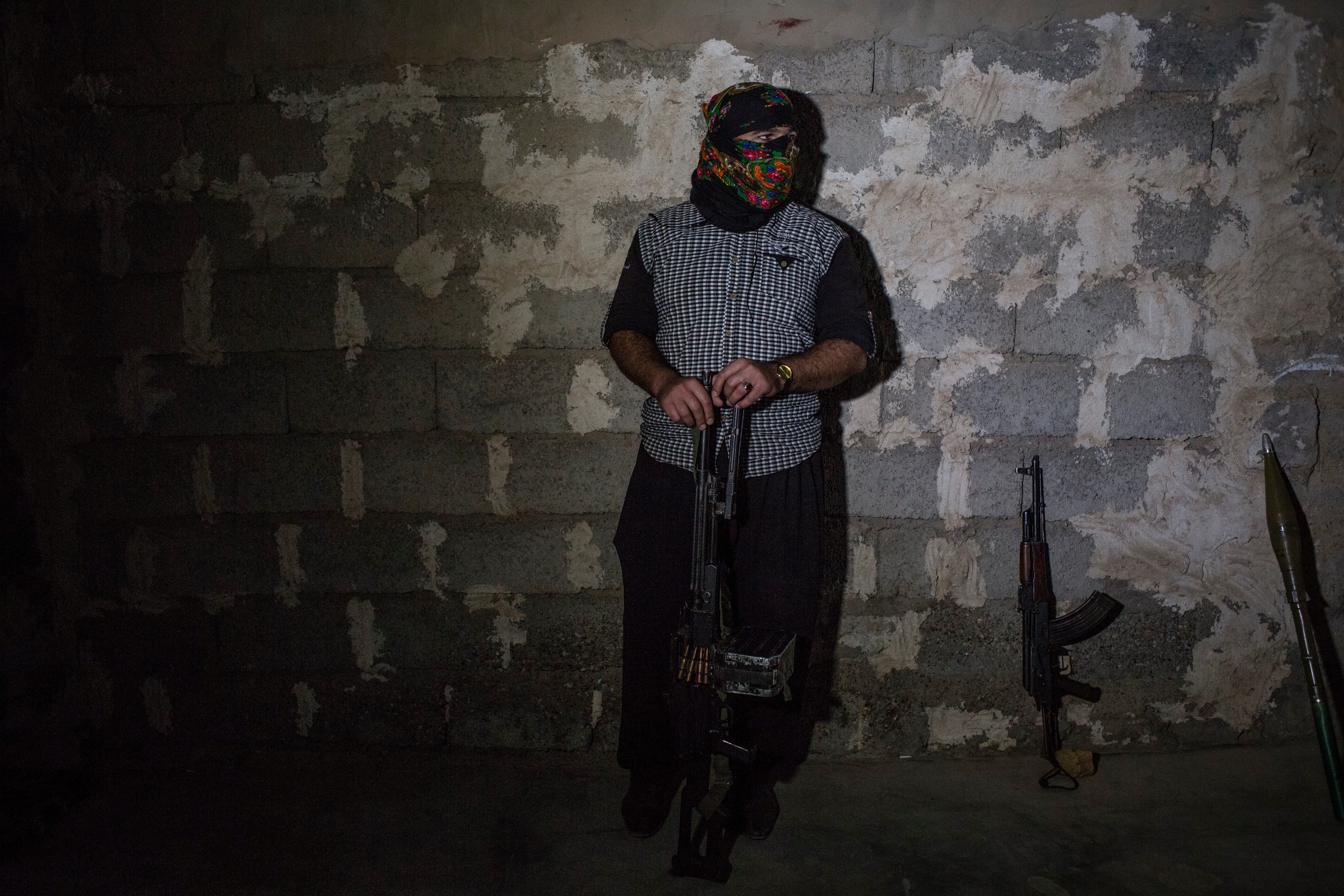
In the early hours after midnight, as word spread that Iraqi forces were approaching, I went to a Peshmerga base on the outskirts of the city. I had photographed these fighters for years — men who had grown old in battle, young recruits who had barely put down their schoolbooks before picking up a rifle.
But that night, something was different. Their eyes were wary, guarded, as though they carried a secret they couldn’t speak aloud. Tension clung to the air like smoke.
They knew me. They trusted me. Yet when I arrived, they ordered me to leave. One of them grabbed my camera and held it back.
I’ll never forget the surge of panic that rushed through me. “I was terrified to see without my camera,” I remember thinking. “It wasn’t a good time to look without one.”
For me, the camera was more than a tool. It was a shield — a way to stand between myself and the chaos, a way to believe that I was there only to witness, not to be consumed by what was happening. Without it, I felt exposed, stripped of purpose.
Dawn
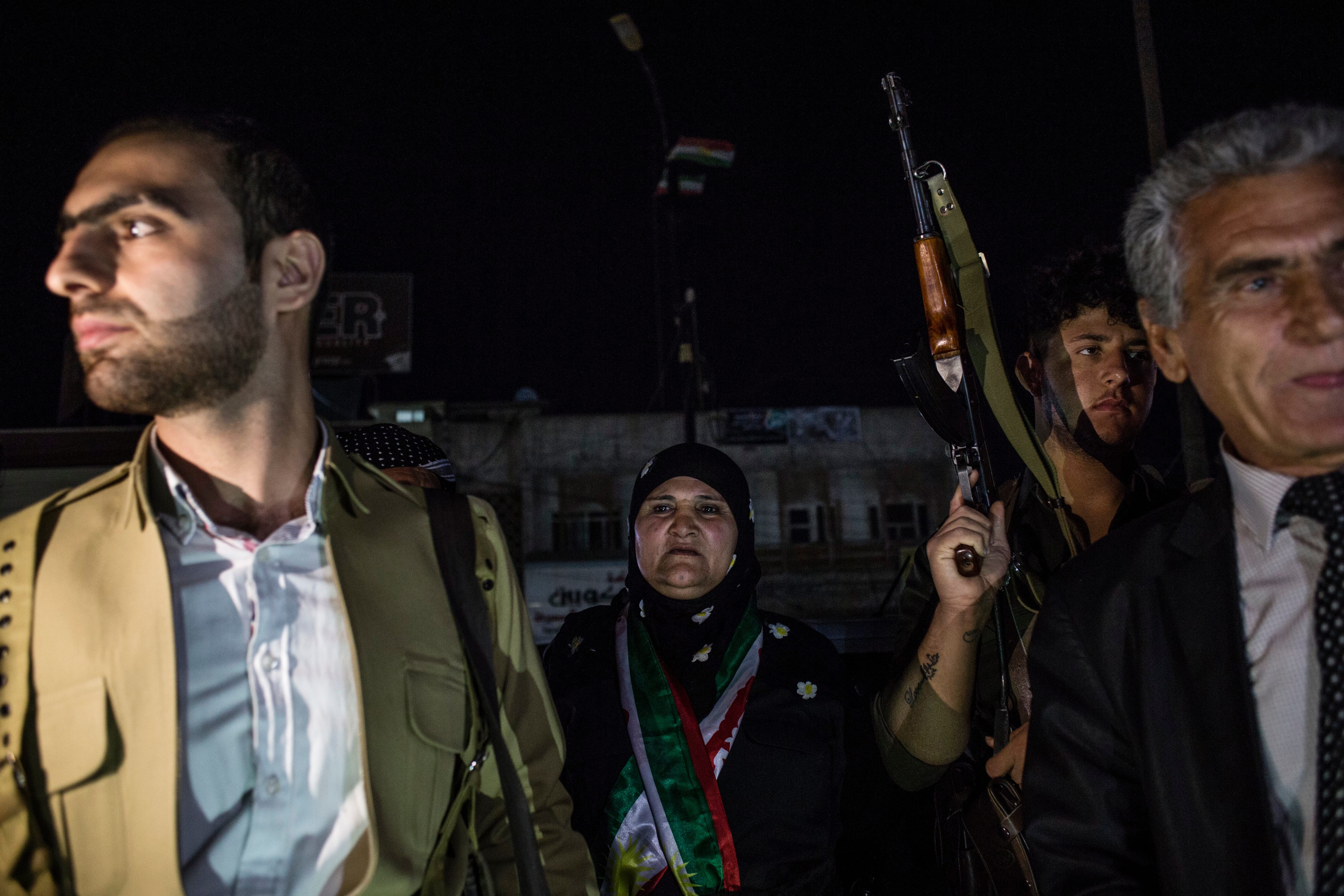
By dawn, I was back on the streets, camera in hand again, photographing the clash as Iraqi forces advanced and Peshmerga fought to hold the city. Smoke curled above rooftops. Then something unimaginable happened: the Kurdish forces began to retreat. One position after another was abandoned without a fight.
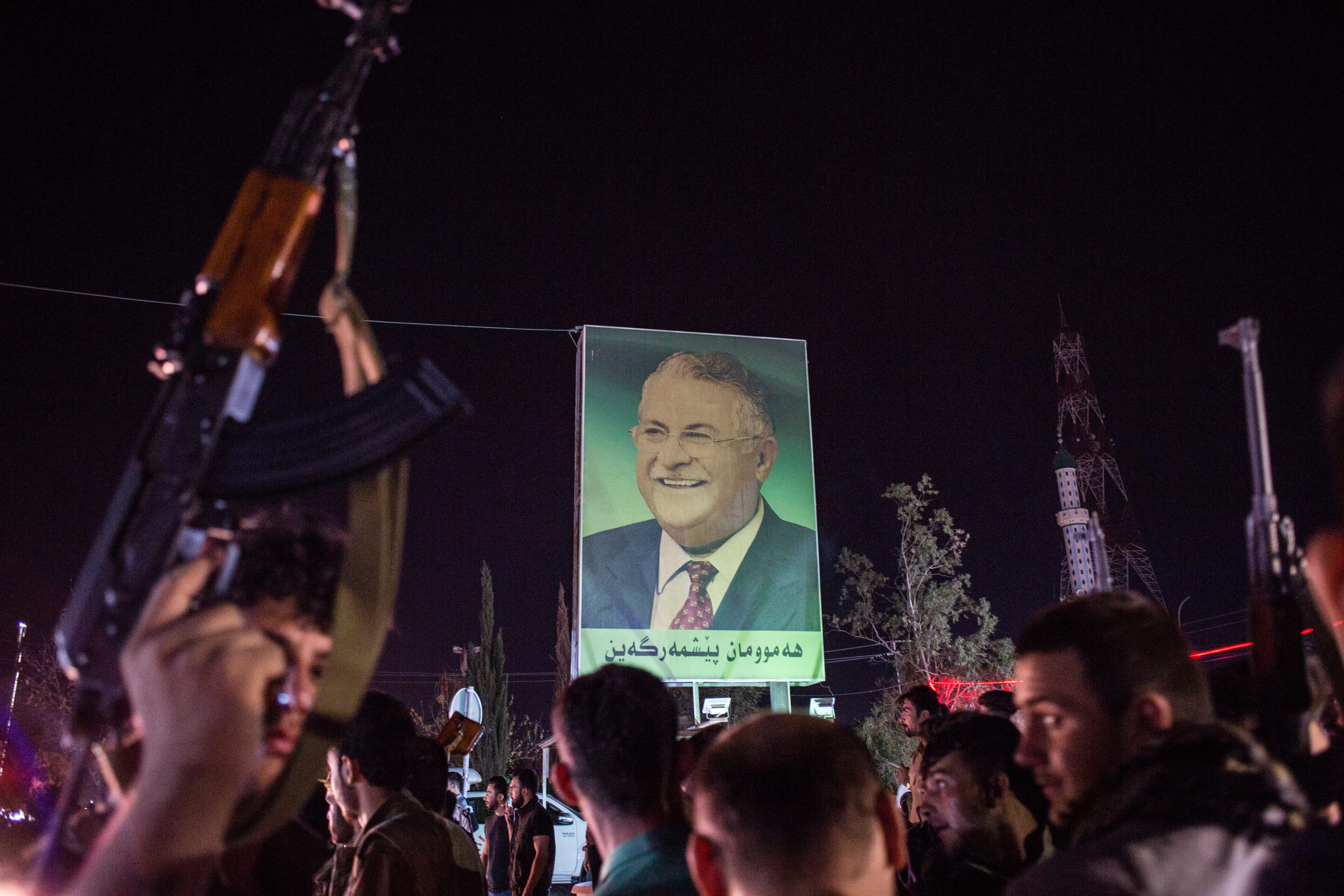
People poured into the streets — shopkeepers, students, mothers, fathers — many of them carrying weapons they had kept hidden for years. They were ready to defend the dream of independence, but suddenly there was no one left to lead them.
Anger gave way to disbelief, disbelief to grief. I saw men with rifles at their sides breaking down in tears. Women shouted curses at the retreating soldiers. I, too, was crying, my hands trembling so hard that my camera nearly slipped from my grip.
It was the moment when the dream of a Kurdish homeland, a dream that had endured decades of oppression and war began to unravel before my eyes.
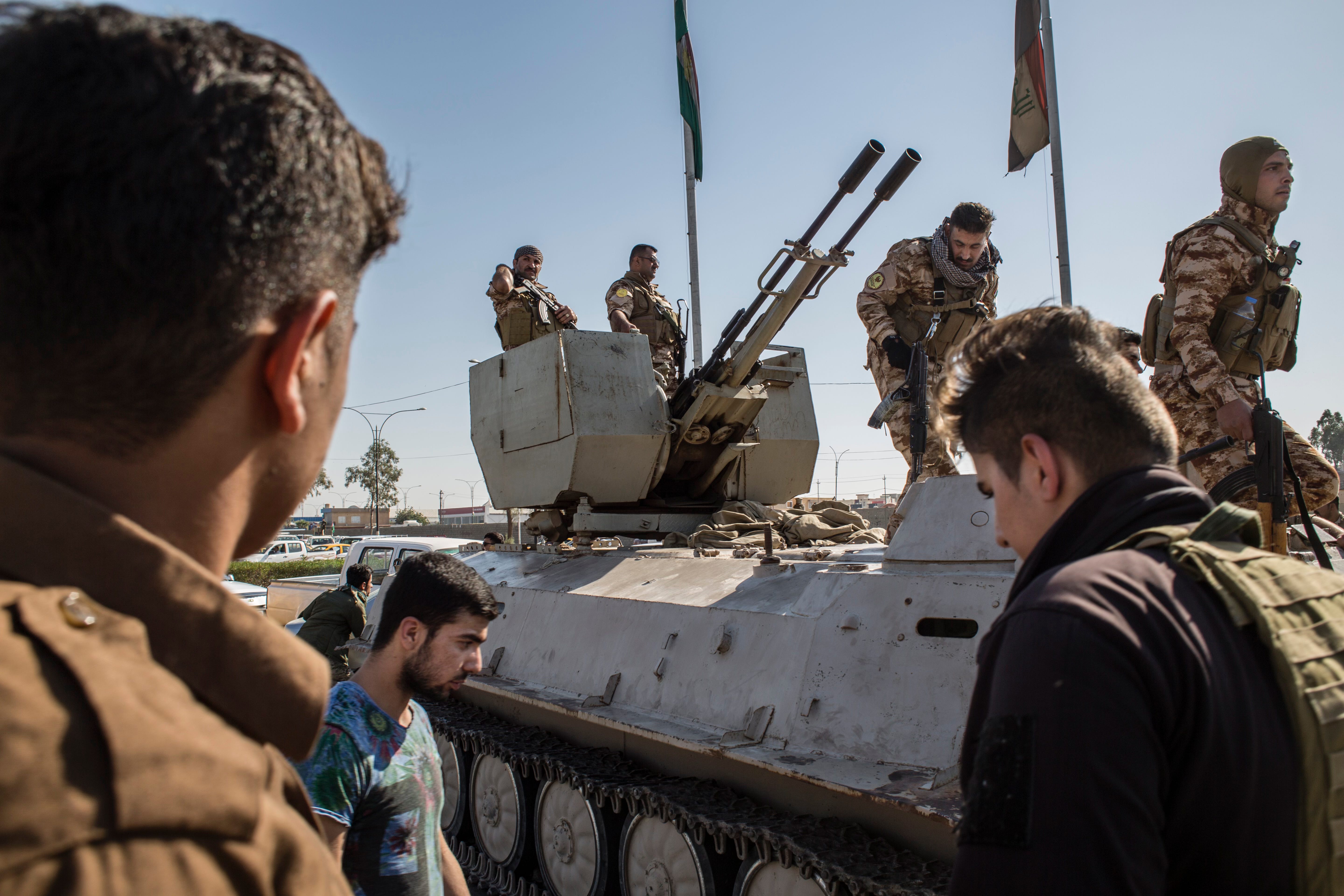
Chaos
As the morning wore on, the violence intensified. Iraqi forces opened fire on civilians. The streets that had once been so familiar to me became unrecognisable choked with smoke, dust, and screams.
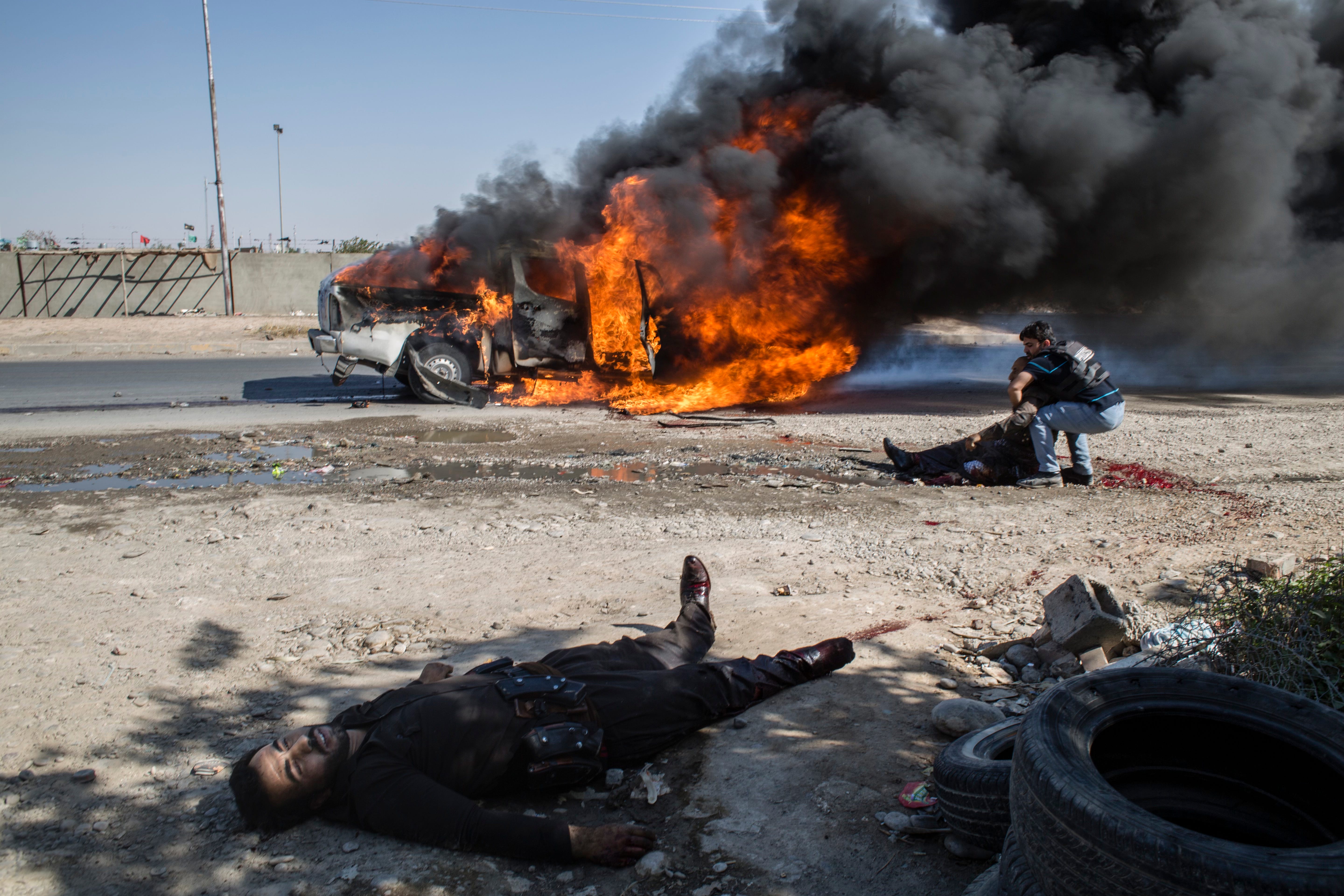
My friend and I got into a car, trying to escape the shooting. We drove in silence, hearts pounding, the sound of gunfire never far behind us. Then, without warning, a vehicle just behind us exploded. The blast shook our car. We stopped.
I put my camera down.
Three men were on the ground, bleeding — one still trapped in the burning car, the other two lying on the asphalt, barely conscious. There was no time to think about documenting anymore; there was only the urgency of saving lives.
We dragged them, one by one, away from the flames. Bullets cracked in the distance — sometimes closer than I wanted to admit. We got them into another car and sent them to the hospital.
One of them died on the way.
One burned in the car.
The other two survived but would never walk again.
Eight Years Later
That day has never left me.
I carry the weight of it, the faces of the men we pulled from the road, the smell of burning metal and blood, the sound of the gunfire, the image of my city surrendering to forces it could not resist.
I have photographs from that morning — fragments of the battle, fleeting glimpses of panic and grief. But some of the most powerful images were never captured on film. They live only in my memory, haunting me in ways no picture ever could.
For eight years, I’ve asked myself what it means to be a witness when the story you’re covering is also your own. What does it mean to put the camera down? What does it cost to pick it up again?
I returned to Kirkuk to tell the story of my people’s struggle for independence, but that day changed the story I thought I was there to tell.
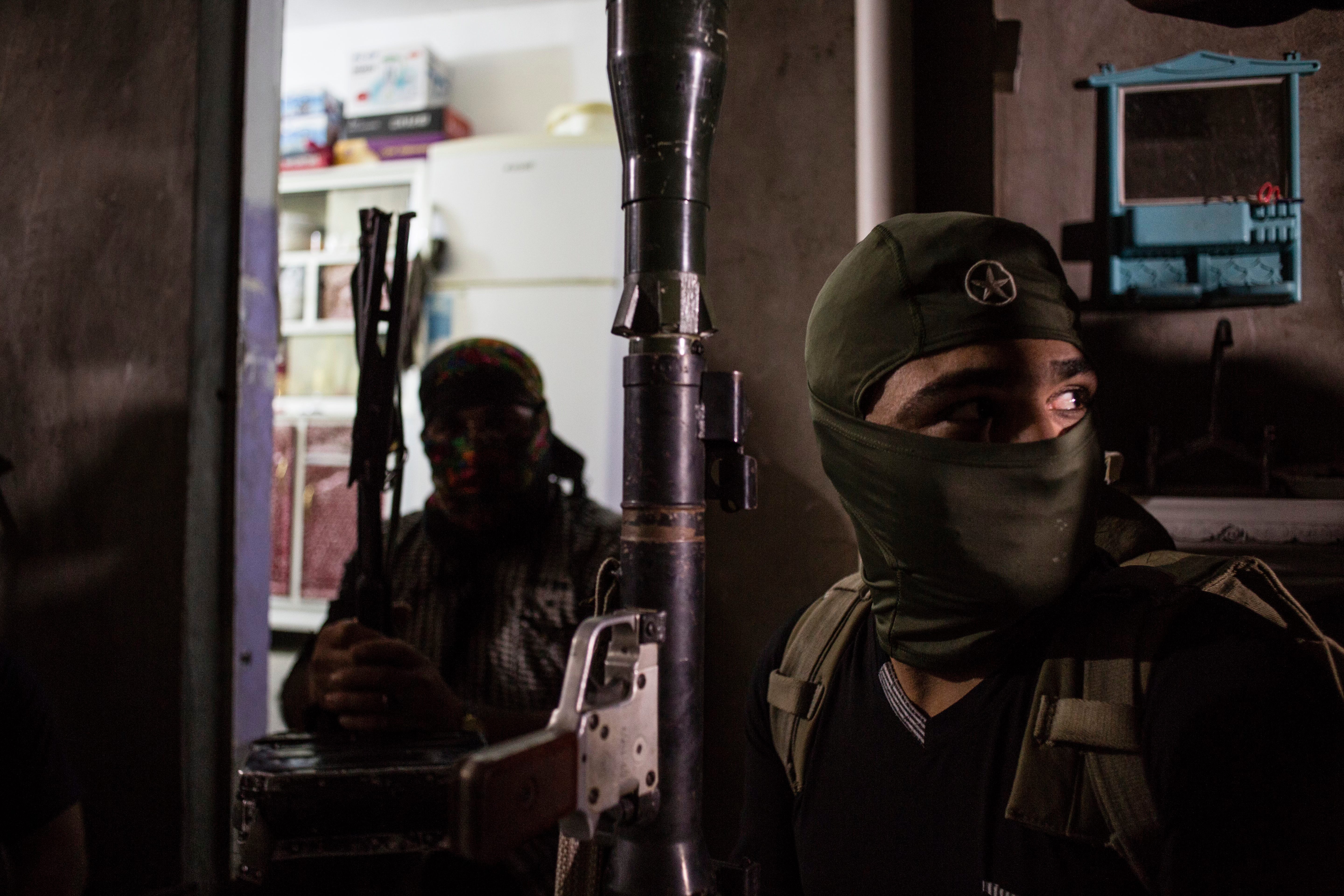
Now, as I look back, I realize that Without My Camera isn’t just about one day in Kirkuk. It’s about the complicated place where journalism and identity collide, about how we carry the stories we can’t photograph, and about the unspoken toll that conflict leaves on those who survive it.
Those stories that remain undocumented transform into emotion in those stories that are. That’s what makes for powerful photography, I think.
Thanks for sharing what must be a difficult story to write.
What a powerful account, it gave me goosebumps to watch your photos before and even more after I read the whole story. Thanks for that, I imagine it must have been really hard to share such a terrible experience and go through these images again!